This article was originally published at blackvoicenews.com.
Sesa Alexander, 23, was in high school when she first heard about the Youth Mentoring Action Network, an Inland-Empire based nonprofit organization that empowers youth through mentorship and creative programming that includes mental health support and hands-on academic learning.
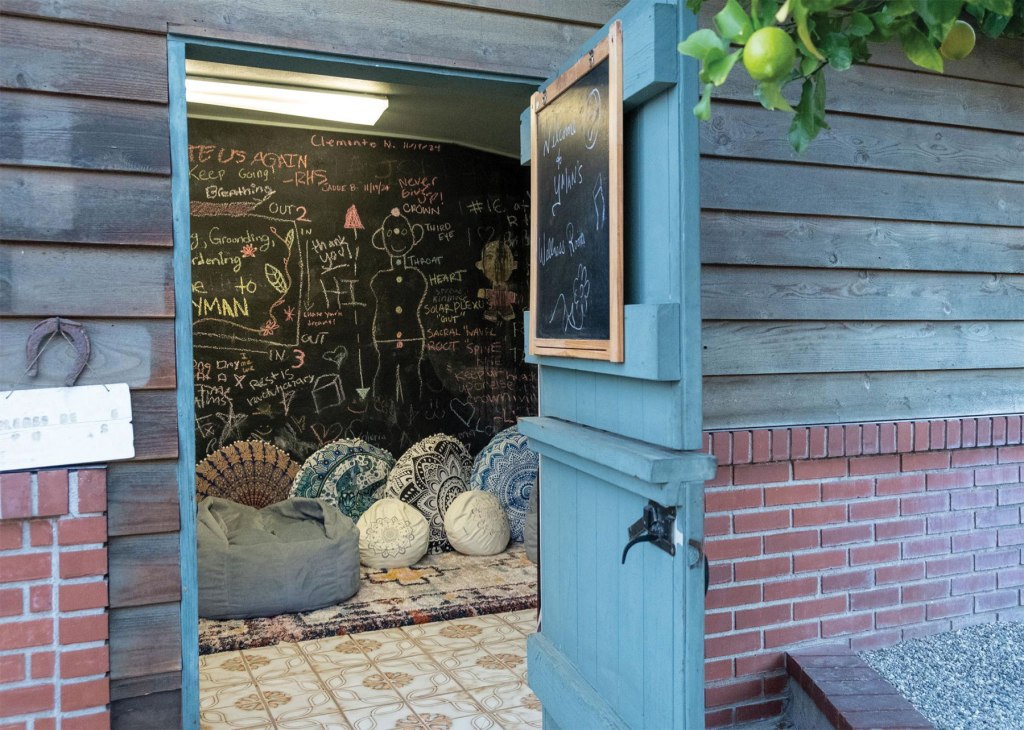
With their unique approach to education, YMAN allows students to guide the curriculum in an unconventional way compared to traditional classrooms. The program welcomes youth and young adults from ages 14 to 24. Their curriculum includes music writing, centering mental health, and creating intentional spaces for learning such as a garden, a creators lab, and a wellness room.
Alexander learned more about YMAN, and their programs when the organization did community outreach at her high school in Rancho Cucamonga. She initially joined their Youth Artist Collective program when she was 19, which she described as being in its “baby stage” back then. But over the years, as YMAN has grown and their programs became more robust, Alexander has watched the organization flourish.

With their unique approach to education, YMAN allows students to guide the curriculum in an unconventional way compared to traditional classrooms. The program welcomes youth and young adults from ages 14 to 24. Their curriculum includes music writing, centering mental health, and creating intentional spaces for learning such as a garden, a creators lab, and a wellness room.
Alexander learned more about YMAN, and their programs when the organization did community outreach at her high school in Rancho Cucamonga. She initially joined their Youth Artist Collective program when she was 19, which she described as being in its “baby stage” back then. But over the years, as YMAN has grown and their programs became more robust, Alexander has watched the organization flourish.
“While I’ve been in college, having a community space like this, it’s meant the world to me,” Alexander shared. While in college, Alexander is also practicing music, but shared how being part of YMAN, with like-minded peers, is a different experience.
Unlike traditional educational programs or standard curriculums, YMAN’s approach to education and curriculum heavily relies on youth input and feedback. In doing so, the nonprofit organization is carving out what alternative education looks like, and how students can benefit.
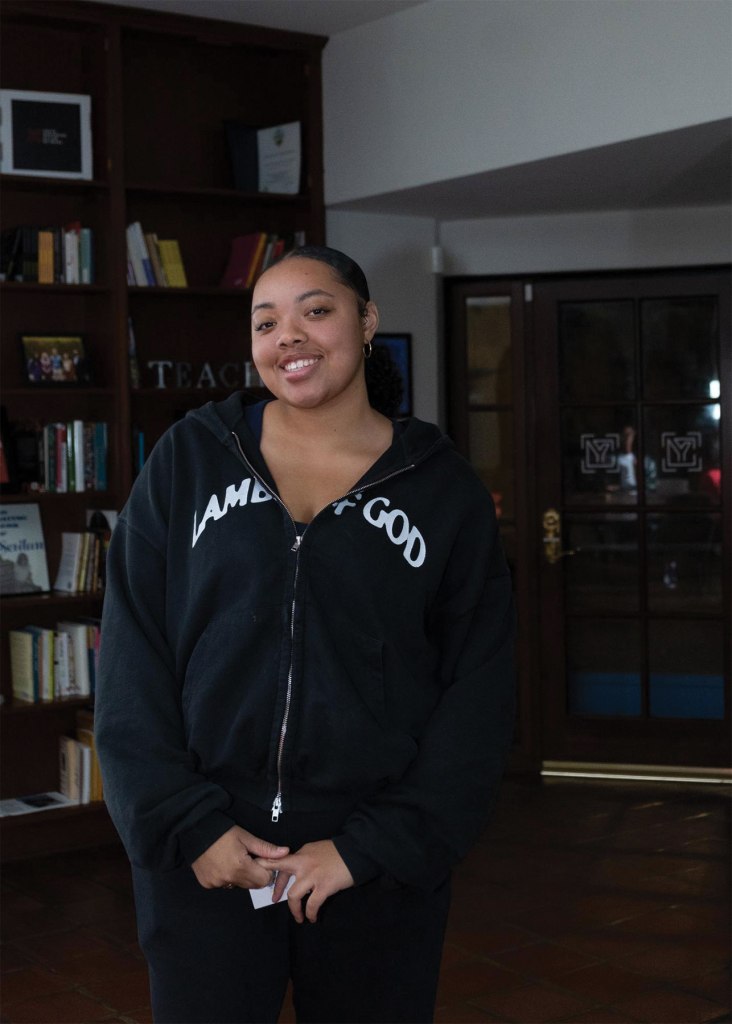
According to Jade Arceneaux, director of programs, schools are limited in how they pour into students. In traditional classrooms, students are generally expected to parrot back what is said to them, Arceneaux explained. At YMAN, the curriculum is designed for students, and in part, by students.
YMAN was founded in 2007, by Dr. Torie Weiston-Serdan, a veteran educator and Dr. Gayle Weiston-Serdan, a music educator and artist. YMAN has expanded since, with the dedication of their staff and funding from local and state-wide foundations who are invested in their mission: to empower young people worldwide through nontraditional experiences and a more creative learning environment.
YMAN’s approach to youth development is what makes the organization distinctive, valuable, and a lifeline to students who participate in their many programs.
YMAN has had a profound impact on students and the community, with the organization reporting in 2024, that 10,000 youth were impacted through training, participating in youth-centered events, and mentorship. YMAN serves as a welcoming youth space, open to youth throughout the community.
The organization reported that 425 young people visited and benefited from their Youth Hub by way of an Education Summit, hosting cohorts of students from their programs, and community-wide events and workshops. They also reported a total of $100,000 in investments in participants of their Black Girls (EM)Power program.
Black Girls (EM)Power aims to nurture Black girls and young women through mentorship, wellness support through retreats, and educational advancement through a six-month fellowship. The program awards a cohort of five youth scholars with a stipend of $5,000 to invest in their time, ideas and advocacy work.
Small, but mighty, YMAN currently employs a staff of four people after recently having to eliminate some roles due to a shortage in funding.
In April 2025, President Donald Trump eliminated 373 grants from the Department of Justice’s Office of Justice Programs (OJP), according to an analysis conducted by the Council on Criminal Justice. According to their analysis, the defunded grants initially totaled an estimated $820 million, but many were multiyear grants in various stages of payout and implementation.
In 2022, YMAN was the recipient of an Office of Justice Programs sub-grant for their work mentoring and coaching youth. The multi-year grant ended in 2024, and was valued at $228,525, according to their tax filings. Excluding the grant, YMAN brought in more than $900,000 in grants in 2024. Though the Office of Justice Programs sub-grant did not make up a substantial part of YMAN’s budget, the loss of funding overall has resulted in the organization having to downsize and release two employees. Part of their strategy has been trying to find a way to automate the duties of those employees.
With federal mandates impacting the landscape of federal grants, many programs are pivoting away from anything that could be perceived as DEI. Doing so leaves nonprofits like YMAN, who may have reapplied before, with little-to-no options.
“There’s no opportunity to reapply, or we would have to apply under whatever the reframing of that grant was, which is usually a whitewashed version of whatever that offering was before,” Arceneaux said.
Like several Black-led and Black-empowering nonprofit organizations in the Inland Empire, a heavy reliance on federal funding has never been a key strategy, but like other nonprofits impacted, the pause on federal funding as a result of anti-DEI mandates has had a trickle down effect.
“Because of the lack of federal funding now, foundations and private donors are trying to fill in that gap for organizations specifically being targeted for saying, ‘We serve Black girls,’ — like you’re canceled for that,” Arceneaux explained. “We’ve seen a delay in funding; super, super delays, where, at one point, because of all the dismantling of DEI and all things DEI, organizations were afraid to give.”
Though not a recipient of direct federal funding, Arceneaux shared that she was surprised by how slower foundations and private donors were to give in 2025 than in previous years. To Arceneaux, it appeared as if foundations and donors were troubleshooting how to rephrase what programs they were funding, as if these funders don’t want to admit they are funding a Black-led organization that seeks to reframe education.
While some funders find themselves pivoting, other foundations like the Inland Empire Community Foundation and the Weingart Foundation have reinforced their support for local organizations like YMAN who serve some of the most vulnerable communities.
“I just want to say that organizations like YMAN remind us why this work matters. It can be easy in philanthropy to get caught up in strategy and systems, and those things are important, but at the end of the day, we are talking about young people in our community who deserve to be seen, supported, and given every opportunity to succeed,” Inland Empire Community Foundations (IECF) Chief Impact Officer Celia Cudiamat stated in an email.
“And IECF is committed to being the kind of community foundation that shows up for organizations like them, not just in the good times, but especially when things get hard,” Cudiamat continued.
For a small nonprofit like YMAN that has year-long programming for students, it’s important that these programs continue and that they show up for students, whether funding is there or not.
Importance of funding alternative approaches to education
YMAN has spent years developing unique curriculums, programs and community events that can only be described as alternative approaches to education, including creating a youth hub for participants to create, learn, explore and commune.
Tucked away on an acre of property is YMAN’s Youth Power Hub. The large property is enclosed by tall, lush trees and metal gates, but inside, the grounds are open, lush and appear to be a safe space for the program’s youth.
Unlike a typical afterschool program, the Youth Power Hub has a dedicated gardening space in which participants engage in intentional gardening and learn about farm-to-table practices. The space also holds intentional outdoor sections for students that includes hammocks, a treehouse where youth have engaged in sessions with licensed therapists, a wellness room, a sound studio and a creator’s lab where students learn from audio engineers and create music.
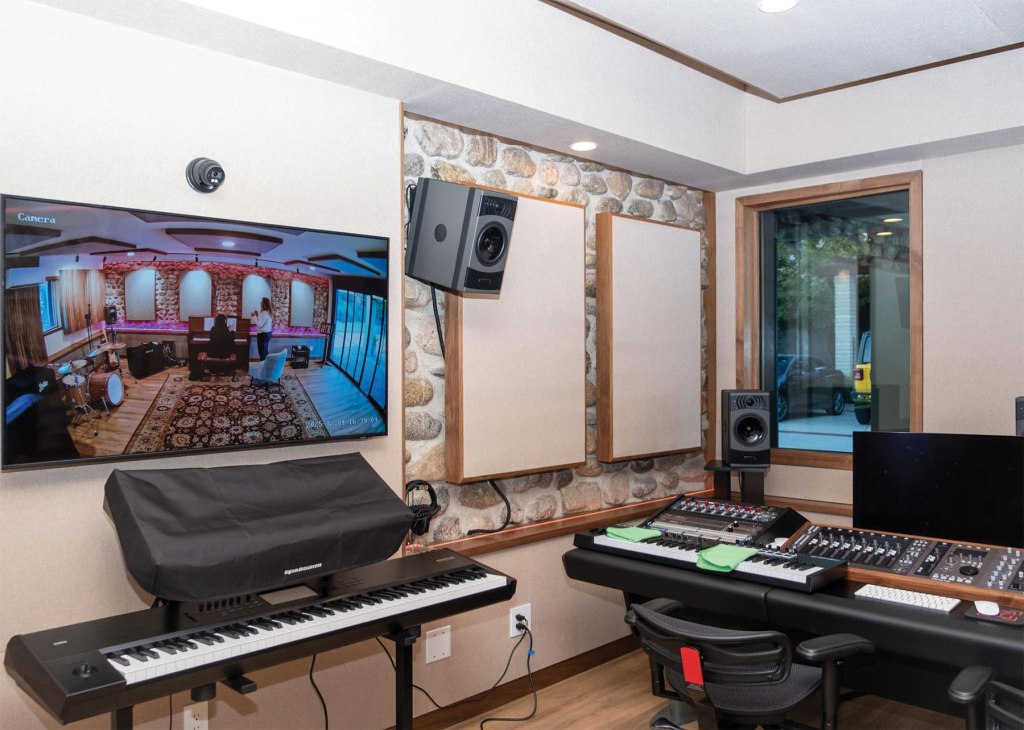
The development of this Hub, which was years in the making, centered on answering how YMAN can create a transformation educational space, Arceneaux explained. Each feature of the property was added at the request of one of the program’s participants.
For participants like 21-year-old Gilda Rosado who was “losing herself,” connecting with YMAN taught her to find value in herself and in community. After moving away from the Inland Empire as a teen when YMAN was in its infant stages, Rosado recently found her way back to the program, and to music, which she described as one of the cores of her being.
“You’re funding youth, and you’re funding the education and lives of young adults that are going to eventually reshape the future,” Rosado explained, addressing funders. “You’re funding and fueling their creativity, their passion, their ambition, everything here. There’s so many resources for all of the young people that are here to build a better life, not just for themselves, but for their community.”
Among YMAN’s skillfully crafted programs is a 12-week music program called the OutLoud Archives in which students learn audio fundamentals, production, songwriting, and mixing. The program is taught by industry artists. Students are provided with hands-on learning opportunities, and young artists are supported by being compensated for their creative contributions. Every artist project created at the Youth Power Hub is also archived.
For the first time, students in the program created a five-track album called “In Between,” which YMAN founders designed into a curriculum called “A Mental Health EP” to be used by other schools and other programs. The curriculum is in accordance with California education standards. The album features credits from 14 YMAN participants, including Alexander and Nevaeh Phillips.
For 20-year-old Phillips, YMAN is a place that supports her and reinforces her abilities to accomplish her goals. As someone with many goals including making music, supporting her community and an interest in nutritional health, YMAN has allowed her to explore her creativity and passions.
“This space and everyone in it, like, really pushed me to understand I can do all of those things if I just put the time in and put my mind to it, instead of being told [by] society, like, ‘Oh, you’re crazy for thinking that’ or ‘you can’t do it,’” Phillips shared.
The Youth Power Hub is designed as a space for community gatherings, learning, a safe space for youth, and a place of rest. The space is closed to the public, but YMAN extends invitations for community partners to utilize the space, which helps with funding gaps.
YMAN also offers a Youth Ambassadors program in which 10 youth leaders, ages 14 to 20, serve as partners, recruiters, program leaders, facilitators, and fundraisers. The program sets out to support youth in their passions by amplifying their voices, helping develop their skills and connecting them with leaders in their fields of interest.
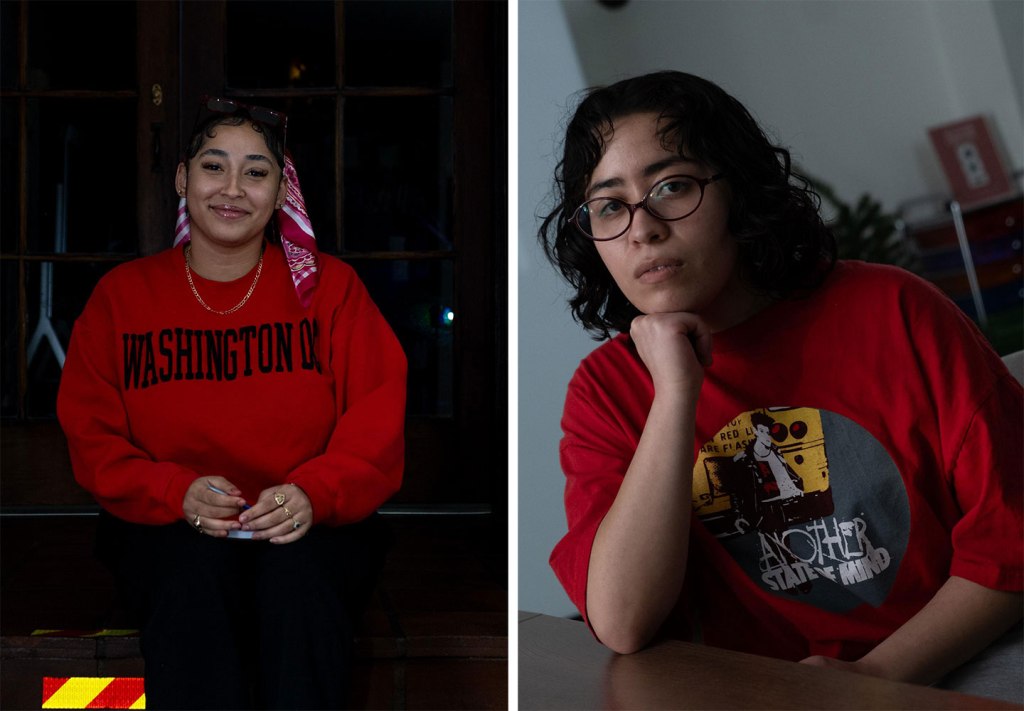
Phillips came to YMAN as a youth ambassador, not knowing what to expect, only sure that she wanted to learn how to do work that served her community.
“I got way more than I thought I would have out of it,” Phillips shared. During the program, Phillips learned key skills that are important to community work such as managing a budget, planning events, managing resources, and utilizing spaces for mental health.
YMAN’s programs are made possible by investments in their mission from local and state foundations and sponsorships, in the youth they serve, and in the Inland Empire.
In 2025, the Youth Power Hub was the site for an Educational Equity Summit, hosted by IECF. The Summit brought together youth, educators, and community members to partake in strategy sessions and discuss youth-led solutions to reimagining education.
In 2023, YMAN was the recipient of a grant from the IE Black Equity Fund. YMAN was awarded $145,900 in the 2023 fiscal year to support their one-of-a-kind programs, including Black Girls (EM)Power.
“For youth in the Inland Empire, moments like that Summit send a powerful message: that their futures matter, that this community is investing in them, and that there are people in positions of influence who are accountable to their outcomes,” Cudiamat said.
While local and state foundations have made steps to bolster support for local nonprofits, Cudiamat acknowledged that doing so isn’t a complete solution. Many philanthropic responses have been slow or hesitant as they navigate a changing landscape and fear legal and political backlash.
At IECF, even the co-founders of the Black Equity Initiative renamed the IE Black Equity Fund to the Mobilizing and Edifying for Collective Community Advancement (M.E.C.C.A) IE Fund in response to the current climate.
Phillips came to YMAN as a youth ambassador, not knowing what to expect, only sure that she wanted to learn how to do work that served her community.
“I got way more than I thought I would have out of it,” Phillips shared. During the program, Phillips learned key skills that are important to community work such as managing a budget, planning events, managing resources, and utilizing spaces for mental health.
YMAN’s programs are made possible by investments in their mission from local and state foundations and sponsorships, in the youth they serve, and in the Inland Empire.
In 2025, the Youth Power Hub was the site for an Educational Equity Summit, hosted by IECF. The Summit brought together youth, educators, and community members to partake in strategy sessions and discuss youth-led solutions to reimagining education.
In 2023, YMAN was the recipient of a grant from the IE Black Equity Fund. YMAN was awarded $145,900 in the 2023 fiscal year to support their one-of-a-kind programs, including Black Girls (EM)Power.
“For youth in the Inland Empire, moments like that Summit send a powerful message: that their futures matter, that this community is investing in them, and that there are people in positions of influence who are accountable to their outcomes,” Cudiamat said.
While local and state foundations have made steps to bolster support for local nonprofits, Cudiamat acknowledged that doing so isn’t a complete solution. Many philanthropic responses have been slow or hesitant as they navigate a changing landscape and fear legal and political backlash.
At IECF, even the co-founders of the Black Equity Initiative renamed the IE Black Equity Fund to the Mobilizing and Edifying for Collective Community Advancement (M.E.C.C.A) IE Fund in response to the current climate.
Funders standing firm in their support in spite of current challenges
Part of the success of YMAN is their utilization of the “train the trainer” model in which students who participate in the program are hired back to work for the program after they age out at 24. With the guidance of YMAN staff, former students have explored educational opportunities as well as noneducational opportunities.
One of their goals is to implement an intern program in which former participants can be paid to come back and learn more about nonprofit work, and to keep them in the IE. Arceneaux shared they are often competing with the job market and Los Angeles.
“Youth Mentoring Action Network as an organization aligns directly with our priorities and our work. Again, we want to build leadership capacity, particularly in youth and youth of color,” explained Joanna Jackson, CEO and president at the Weingart Foundation.
During the 2024 fiscal year, the Weingart Foundation awarded YMAN several grants totaling $500,000 in support of the Youth Hub, the Youth Builders Coalition and for overall operating support.
Jackson emphasized the valuee of YMAN’s Youth Hub as being an important physical space as a place where youth and the community come together. It is also important for YMAN’s permanence and capacity building.

“For us also, our priority is investing in those communities that are most marginalized in leadership, that are led by centering [them], and YMAN really does that. They don’t just work with [them], but they actually work from a place of those young people actually having leadership and directing that work,” Jackson continued. “So, I think they hold a unique space, particularly in the IE, for that work: the intersection of leadership and wellness, in education and mentorship.”
As some federal mandates stand firm against DEI-related programs and initiatives, philanthropic organizations are navigating the impacts of these mandates in different ways. While some organizations have restructured their funds and others have reworked grant proposals, others like Weingart, are adamant that philanthropy, specifically private philanthropy, must stand firm.
As a private grantmaking foundation, Weingart does not rely on federal funding. Grants from private foundations and community foundations in combination with federal grants contribute to the growth of nonprofits. But with dwindling federal grants, nonprofits become more reliant on private foundations and community foundations like IECF.
As a community foundation, IECF works as a public charity in which donors and individuals support the Foundation and different funds, like M.E.C.C.A. While community foundations don’t benefit from federal grants, they can distribute federal dollars.
“This is a real and urgent concern, and I won’t minimize it. The uncertainty around federal funding is creating a genuine crisis for local nonprofits that are doing essential work, and organizations like YMAN are feeling that pressure,” Cudiamat said. She explained that the role of IECF now, is to step up during these moments.
Last year, IECF launched the Community Impact Fund as a direct response to the increasing need from nonprofits across the Inland Empire due to dwindling federal grants.
“It’s not a complete solution, but it reflects our commitment to standing with our nonprofit partners even when the broader funding environment is volatile,” Cudiamat stated. “We’re also continuing to work with donors, partners, and philanthropic peers to build more resilient, flexible funding streams that aren’t as vulnerable to federal shifts.”
While community foundations may have some limitations in their capacity as public charities, private foundations have more autonomy.
“If there’s anyone who can stand up in this moment, it needs to be private philanthropy because we don’t have federal dollars that are going to be pulled that are hanging over our heads. I recoil at the over reaction to protect ourselves when we are not the ones facing the greatest risk, and the greatest risk is to the communities we serve,” Jackson said. “So, we need to be standing firmly in whatever will be most protective and affirmative of the community and the work, and our values.”
As nonprofits weather this period of uncertainty, Jackson argued that this is a moment for philanthropy to lead with courage, to protect community partners and to not compromise values.
“Because where are we going to be on the other side of this?,” she questioned rhetorically. “We pull back now, what are we going to have to invest in?”
This article, part of a series BlackLash 2025, was reported through a fellowship supported by the Lilly Endowment and administered by the Chronicle of Philanthropy to expand coverage of philanthropy and nonprofits. Black Voice News is solely responsible for all content.