
This story was originally published online at blackvoicenews.com.
As days remain until Election Day, Americans are feeling anxious about the 2024 presidential campaign, according to a recent poll released by The Associated Press-NORC Center for Public Affairs Research.
The survey of 1,233 adults between Oct. 24 and Oct. 28 found that nearly 70% of adults surveyed feel anxious about the 2024 presidential campaign, a similar feeling for adults during the 2020 presidential campaign (65%).
About 60% of adults surveyed described not being excited about the presidential campaign.
“With a lot of the issues that we’re experiencing currently, and particularly as the election approaches, I’m seeing a lot of my clients in private practice grappling with a lot of anxiety symptoms and an exacerbation of their anxiety conditions,” said Danielle Moore, a Riverside-based licensed clinical social worker of roughly 12 years and founder of her private practice, Infinite Alignments Therapy & Consulting Services.
Vice President Kamala Harris and Republican presidential candidate Donald Trump have spent the last few weeks campaigning hard across the nation. Trump hosted a rally near the Coachella Valley in early October while Harris has appeared on popular podcasts and sit-down interviews.
According to the AP-NORC poll results, Black adults are experiencing more excitement (46%) about the presidential campaign than white adults (33%), and only slightly less anxious than white adults (62% vs 73%) about the campaign. Hispanic adults feel less frustrated (63%) about the campaign than white adults.
“When it comes to the Black community, we experience a great deal of anxiety, fear, insomnia and even racial trauma in navigating election season,” said Dr. Patrice N. Douglas, clinical psychologist and licensed marriage and family therapist based in Rancho Cucamonga. Dr. Douglas explained that these feelings are often the result of the things that have been said, promised and threatened during election season. “We often, as Black people, get the worst of it when it comes to racial tension.”
This election season has left many Americans feeling uncertain and as Election Day draws closer, some voters are experiencing heightened anxiety.
“The way that I describe anxiety is the perceived lack of control over circumstances. It may be excessive worrying, difficulty controlling the worry. It could result in irritability. It could be easily agitated or angered; inability to relax or get comfortable, feelings of restlessness, overwhelming sense something bad can happen,” Stacy McCall-Martin explained. McCall-Martin, a licensed marriage and family therapist based in Menifee and a global lifestyle coach, described these symptoms as being part of generalized anxiety disorder, which can include panic attacks.
While voters can’t avoid Election Day (or may find it hard to do so), four mental health experts discuss how voters can protect their mental health before, during and after Election Day.
Prepare for Election Day
Moore advised people to focus on what they can control, rather than what they can’t.
“You can control having that vote. You can control your voice. I know that sometimes elections can feel a bit disempowering, but feel empowered that you have the opportunity to make an impact,” Moore said.
Ninety-nine percent of McCall-Martin’s clients are Black women, and many have displayed more symptoms of anxiety as the election grows closer.
“Being fully aware of the implications of everything that can happen next week, it’s important to be aware of it, but also to do what you can to prepare for the best or the worst of the outcome from the election,” McCall-Martin said. “So, concepts of protecting my peace and boundaries, those types of things can be extremely helpful.”
McCall-Martin encouraged some people to practice routines to help manage their anxiety.

“There’s some rhythm to the things that you do, so connecting with nature around you, using your five senses, whether that’s grounding, taking mindful, meditative practices or centering practices,” McCall-Martin listed. “Some folks really find value in accessing the higher power they choose to call God [by] praying.”
On Election Day, if voters plan to vote in-person, McCall-Martin suggested they be very intentional about their route; consider what time to leave to vote and where to vote. Rideshare company Lyft is offering 50% discounts to shuttle those who are going to the polls on Election Day. McCall-Martin also recommended listening to calming music while waiting in line.
“So, the tip that I have is, first of all, meal prep for the week, or plan to eat out as much as you can. A lot of times when we’re stressing, the first thing that we can’t think about is food,” Dr. Douglas advised. “So make sure you have your comfort food, your snacks; make sure you meal prep or you have a plan on how you want to eat takeout because it’s already going to be a very heavy day. It’s going to be a heavy week.”
Increase self-care practices
Sleep deprivation or changes to one’s sleeping pattern is a result of anxiety, according to McCall-Martin and Moore.
An online survey of 2,006 adults across the U.S., between May16 and May 24, 2024, commissioned by the American Academy of Sleep Medicine (AASM) reported that nearly half of people (46%) lost sleep due to worries about the presidential election.
McCall-Martin encouraged individuals to get a restful night’s sleep and create practices that will ensure a good night’s rest like using the Calm app or a white noise machine.
“When anxiety doesn’t have a place to go or a place to be managed, it can definitely turn into sadness or a hopeless situation [and] depression,” Dr. Douglas explained. She noted that some events related to the election that seem familiar or that have happened before can bring back a traumatic type of feeling.
But these experts offer ways to combat such feelings and how to manage the anxiety or sadness.
“I also suggest that you bulk up your self care, whether you’re turning on the TV and reading more, doing more skincare, doing more exercising, watching funny things, tapping into your spirituality,” Dr. Douglas said. “This is a time where things are going to be very heightened, so you need to stay as grounded in yourself as possible.”
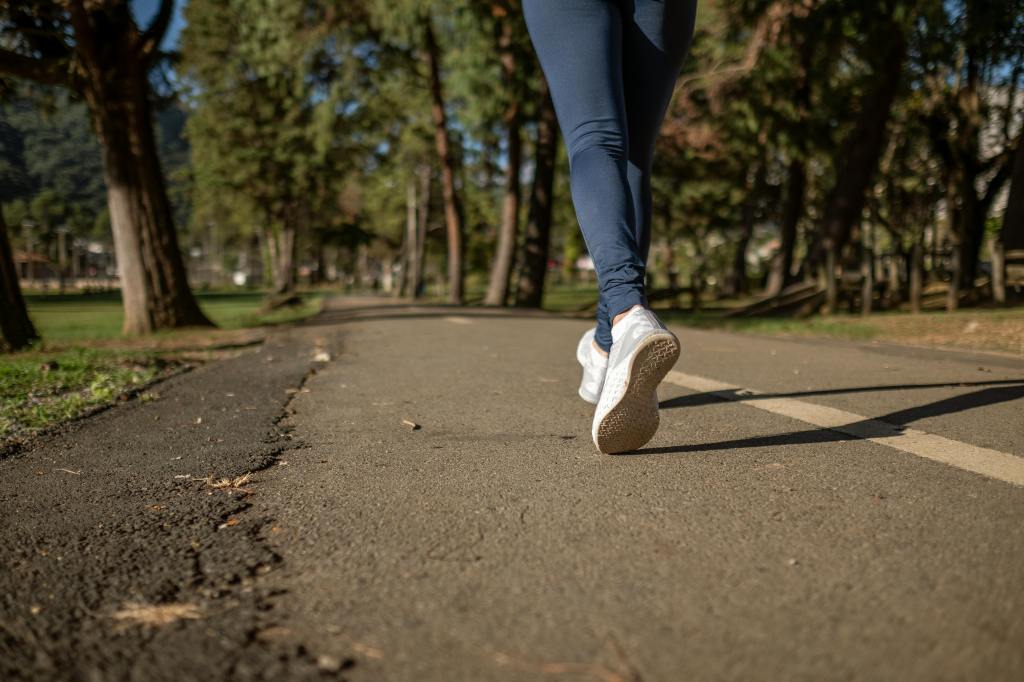
Moore recommends going outside or going for walks before, on and even after Election Day.
“Maybe after you vote, take a half day. Take some time off from all of the scheduled activities and just go have some fun outside. Get that vitamin D, get some fresh air,” Moore said. “Do some grounding activities. Do some meditation. Talk to your people, connect with your tribe. These are all things that just can make you feel engaged.”
Limit your social media time
Moore practices social media boundaries with her clients.
“I really call it social media cleanup and when we look at the boundary setting around social media, it’s okay to stay informed. We have to stay informed. As people of color, we don’t have a choice other than to stay informed — it’s essential, but it can be overwhelming to take in a lot of content,” Moore explained.
With the 24-hour news cycle and constant updates on social media apps like X and Instagram, Moore explained that it can be triggering to see flashing headlines and to consume that type of content.
Moore suggested setting boundaries around the time of day to consume content. Choose a time of day that works best to consume social media like the morning or evening. Moore also recommended consuming content from trusted sources that provide factual information like trusted messengers or news sites.
“If we’re constantly engaging on all the news platforms and we’re constantly engaging on social media, we are diminishing our mental health because we’re starting to feel very hopeless — very hopeless and helpless,” explained Wendy Whitmore, licensed marriage and family therapist and owner of WW Healing House, of Truth, Healing & Evolution Counseling Services.
Disengaging from social media can help lessen feelings of hopelessness with regard to election discourse, according to Whitmore, who also advised people not to read comments on social media posts.
Some of McCall-Martin’s clients who have experienced higher anxiety as a result of the upcoming election have chosen not to watch the news during political segments and have cleaned up their social media accounts.
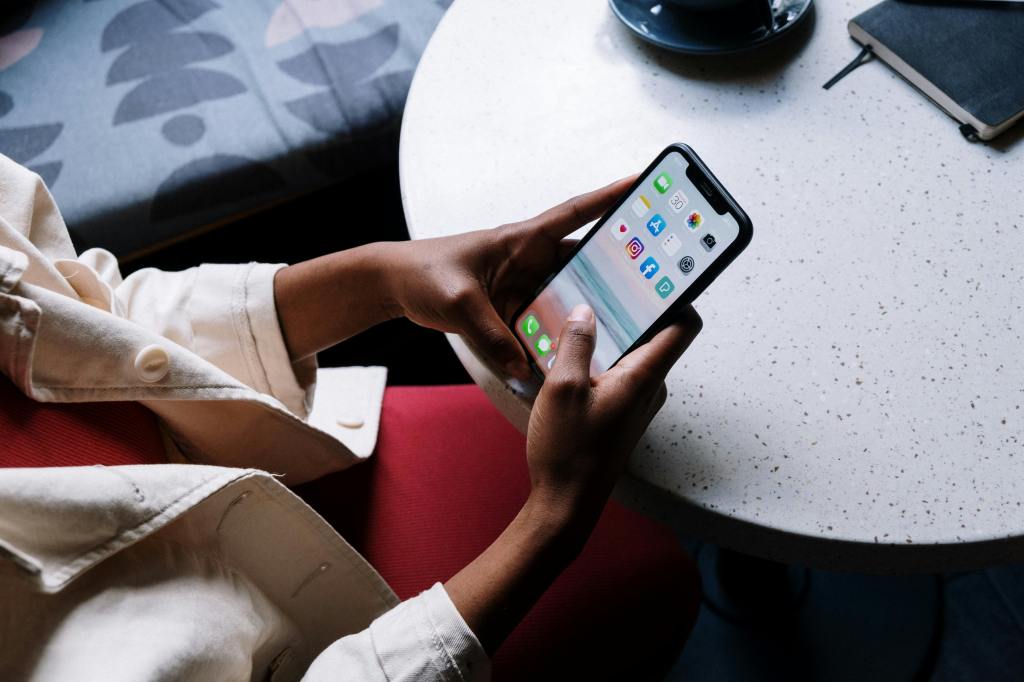
“They have removed themselves from this, and they have made the decision to look up the ballot measures on their own, so that they can understand what is the risk of voting yea or nay on specific measures,” McCall-Martin said. “And that helps them to feel like they have a sense of control and that they can contribute in a way that’s healthy for them.”
In a digital age, there are so many sources of information, but as online mis- and disinformation grows, it is getting harder to differentiate between fact and fiction. Dr. Douglas encouraged people not to argue with people on social media, which are likely to be bot or troll accounts.
“So, one of the things I often preach about is choosing one source for your information. I know that’s hard to say, even for myself. I’m on every platform outside of Tik Tok, but when it comes to elections, just in general, if you have a specific place that you go to for news, choose one spot,” Dr. Douglas said. She also recommended limiting checking social media apps to just four times a day.
“We don’t need to know the new updates every two seconds,” Dr. Douglas continued. “That actually creates a lot of anxiety.”
Engage with your community
“We can get refreshed when we connect with others,” McCall-Martin said. Connecting with one’s community can be hanging out with co-workers, family or friends the evening before or of the election. “So the concept of community can be really helpful in making such monumental decisions for our country and for ourselves.”
Dr. Douglas emphasized engaging with social networks (“unless they’re triggering you”) to find comfort and camaraderie.
“You guys need each other, so make sure you guys are staying tapped in. Send some jokes to each other…to just kind of get your mind off of things,” Dr. Douglas said.
Whitmore shared the same sentiment and urged people to “tap in with your village” and make plans with close friends to have something to look forward to after the election. Importantly, Whitmore suggested not engaging in water cooler talk with coworkers on Election Day or after.
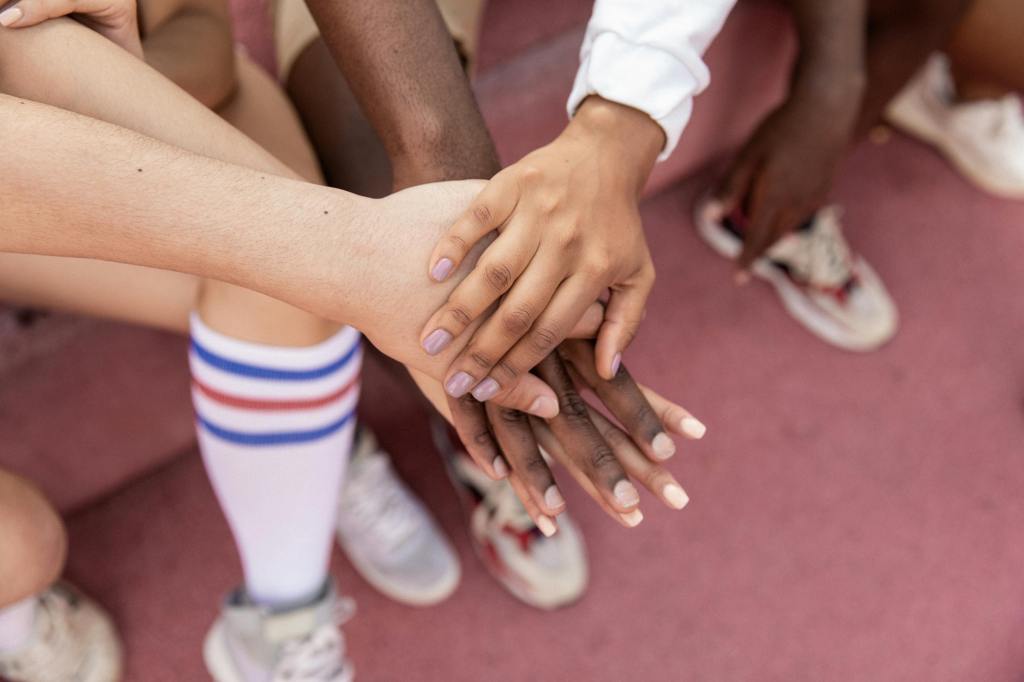
“I want to add that Black folk, we have to recognize that it’s okay for us to lean on our village. It’s okay for us to lean on our folks. A lot of times we’re out here trying to do things on our own, and we forget that we are a communal people,” Whitmore explained.
Others may find it helpful to share voter guides and educational resources within their community, and to be politically engaged and informed.
“Tap in with your community, and find ways that you can get more involved politically in your community, where you can make smaller impacts toward larger issues that you feel are happening in your area,” Moore offered.
When it’s time to seek professional help
As people grapple with anxiety around voting and the election, there are several warning signs or indicators that signal when it may be time to seek professional help.
“If we’re solely based on relying on our internal clues to know when it’s time to seek therapy, I would just say when you feel like you’re just not being yourself; when you feel like something’s missing,” Moore said. According to Moore, there isn’t always a huge trigger or event that leads an individual to seek therapy. It’s important to seek help before a person begins to spiral, have notable performance issues at work and before it results in a breakdown.
Under the Affordable Care Act, mental and behavioral health services are considered “essential health benefits” and most health insurances must cover these benefits. However, limitations to coverage can be seeking a specific therapist who may not be within an insurance network. Some individual therapists charge specific rates or may have a sliding scale. Some organizations like The Loveland Foundation have a therapy fund in which Black women and girls who need financial support for therapy can apply for funding.
McCall-Martin explained that one marker for needing therapy according to insurance standards is when behavior causes impairment.
“If someone is experiencing symptoms and it is interfering in an activity of daily living, [such as] they’re losing it on the job; they can’t focus on their work; they’re falling behind in school,” McCall-Martin described, “when it’s interrupting a function of daily living that is considered of clinical significance, it’s important to reach out.”
Stigma related to seeking therapy has lessened over the last few years as more and more people normalize getting help. Following the first year of the pandemic, in February 2021, 46.1% of adults in California reported symptoms of anxiety or depression, according to National Alliance on Mental Illness (NAMI). But an estimated 22% of adults were unable to get access to counseling or therapy.
“I think people, especially in the Black community, often feel like things have to be really bad for you to talk to a professional,” Dr. Douglas said. “When you even have the hint that you’re not doing well, and you want more insight, that’s a good place to start.”
 Breanna Reeves