
This story was originally published online at blackvoicenews.com.
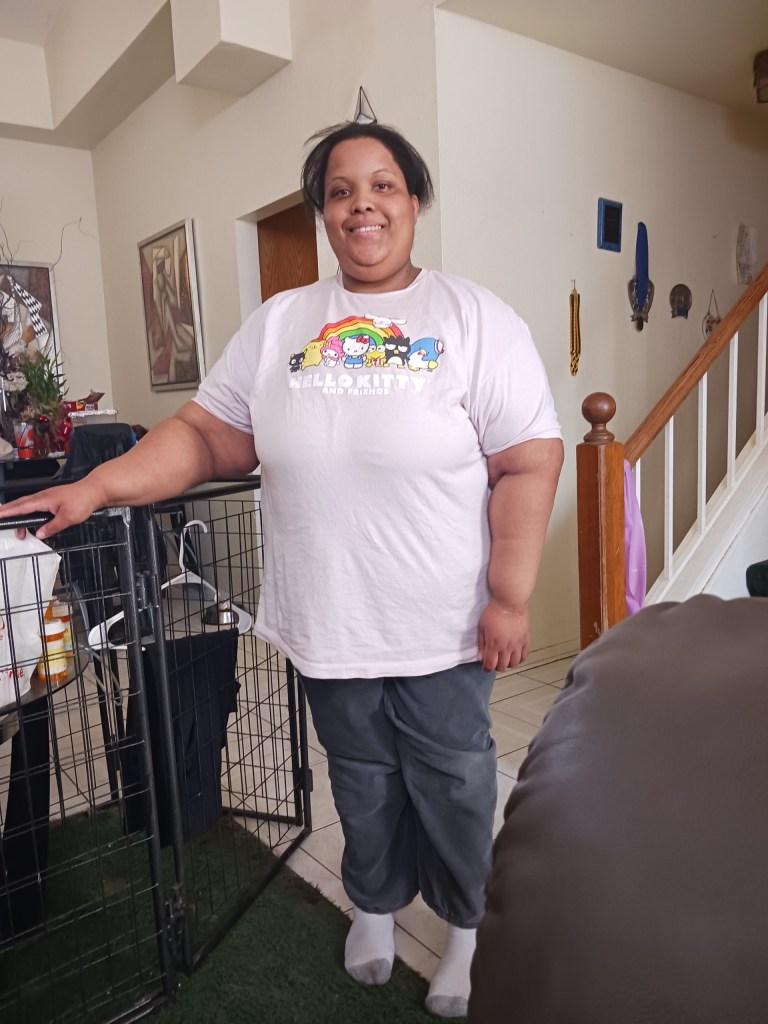
Patrice Brown, 69, has been caring for her sister, Michelle Rogers, for most of her sister’s life. Rogers is 65 years old and is afflicted by cerebral palsy, a group of disorders that impact her ability to move and maintain balance, and has several other medical issues. Brown is also a care provider for her 31-year-old niece, Veronica Cloud, who has an intellectual disability.
Brown provides care to her sister and niece in her Victorville home where she lives with her husband and her nephew, Nicholas Cloud, who has autism.
Brown quit her job to become a registered In-Home Supportive Service (IHSS) individual provider for her sister and niece 14 years ago. An IHSS provider is someone who gets paid to provide services to a person who receives in-home supportive services under the IHSS Program. An IHSS provider can be a family member, like Brown, or a friend, or a registered provider through the public authority. Prior to becoming an IHSS individual provider, Brown still cared for her sister and niece.
“I’m fighting the battle with taking care of my family members with the strong support of our union,” Brown said.
Brown joined the Service Employees International Union (SEIU) Local 2015 as a union member 15 years ago, after breaking down in tears at her doctor’s office.
“She asked me how I was doing with the people in my home, and I just broke down. I could not stop crying. I love my family, but I felt like I was going through all the stress by myself,” Brown explained. “But the first thing the union did was let me know I was not alone.”

SEIU Local 2015 is the largest union in California that represents more than 470,000 long-term care workers, including those who work in home care, skilled nursing facilities and assisted living centers.
As an IHSS individual provider, Brown shared that joining the union empowered her to make her own decisions and gave her strength knowing she wasn’t facing the challenges of caregiving on her own. Brown is one of 30,953 IHSS providers caring for a family member in San Bernardino County.
In San Bernardino County, 45,963 clients receive care through IHSS — 24,534 of whom are 60 years of age and older. These clients account for 53% of the total IHSS clients.
With the aging population growing at rapid speed, the demand for IHSS providers has grown. According to Tiffany Nelson, a supervising program specialist for training and recruitment at Riverside County IHSS Public Authority, there is an “unlimited, ongoing need for caregivers.”
Essential support for seniors and people with disabilities
In Riverside County, over 45,000 IHSS caregivers deliver services to more than 53,000 seniors and people living with disabilities.
“More than 90% of those caregivers who we currently have are going to be family members. So, 10% or less will come from the public registry,” said Gene Kennedy, senior public information specialist for the Riverside County Department of Public Social Services (DPSS). “They’re vital because they help fill gaps in care for some of these folks.”
As an employee through IHSS Public Authority, Nelson is responsible for the recruitment and enrollment of IHSS providers to the registry. The registry is composed of caregivers who help people who have no family or loved ones with the capacity to care for them. Nelson oversees training access for providers and is responsible for recruiting registry providers for a “stranger to stranger” match.
Part of the process of enrolling as an IHSS provider includes a criminal background check and drug and alcohol screening due to registry providers being stranger to stranger matches. Once the enrollment and orientation process is complete, a social worker will review provider information such as location, type of client they’d like to work for, among other criteria. Then, interviews are scheduled where the client or care recipients can interview caregivers to see if it’s a good match.
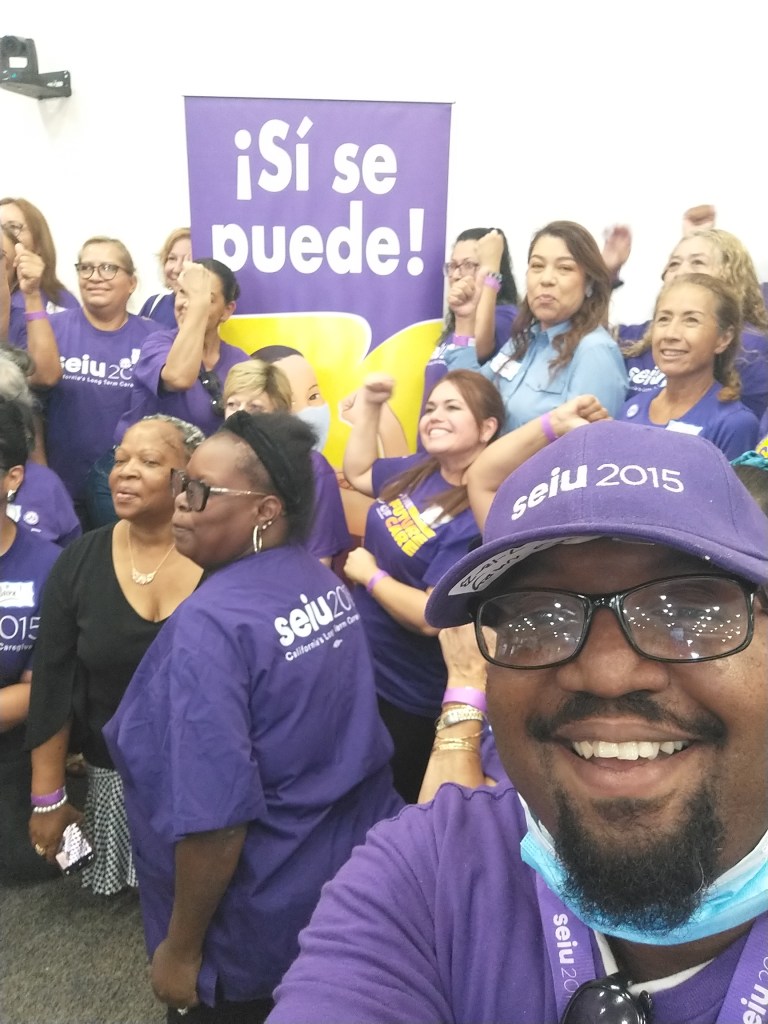
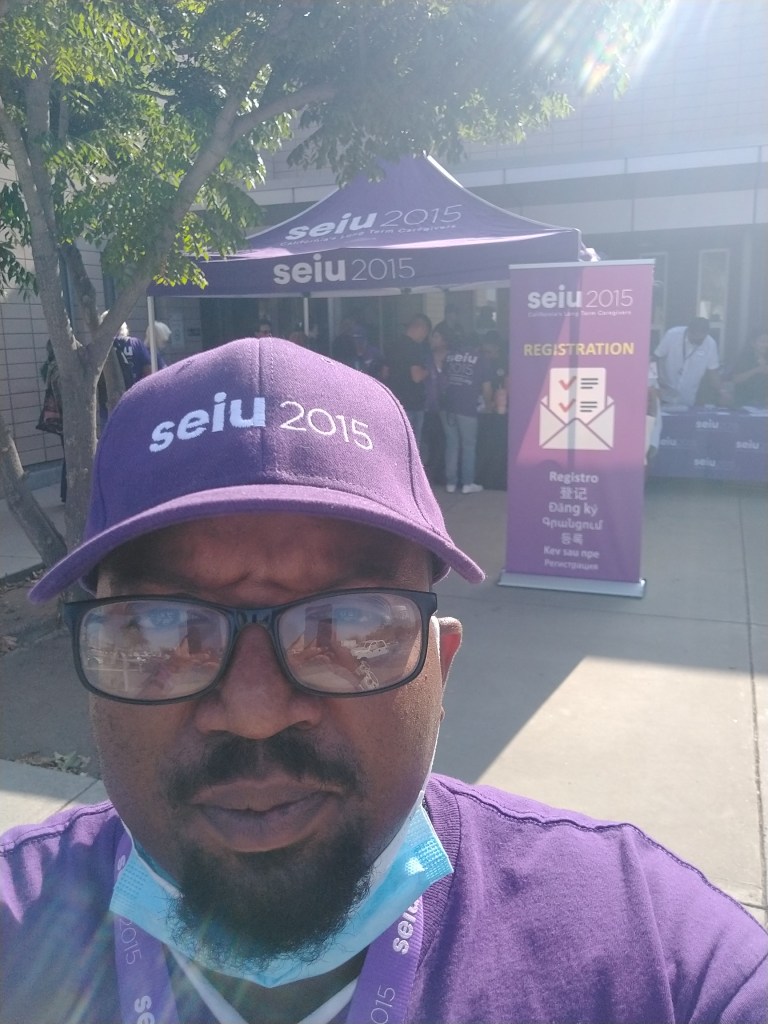
San Bernardino resident Jeffrey Nary, 37, has been a registry home care provider since 2018 and has worked with five clients since he started the program. He’s also a volunteer member with SEIU Local 2015 region 2 which supports workers across San Bernardino, Riverside, Orange, San Diego, Ventura and Santa Barbara Counties. He is one of 2,921 registry providers in San Bernardino County.
Nary currently has two clients and supports them with appointments, meal prepping, cooking, reading their mail to them, and much more. He helps take care of their activities of daily living (ADLs) and spends time with them so they’re not lonely.
While this work can be challenging, Nary recognizes the needs of aging adults and explained that care providers need to have passion to do this work.
“You want to do it wholeheartedly. In other words, you want to have a zest for it,” Nary said. “Some people, they can’t get out of bed as easily anymore. Our retirees, they need help with…errands, grocery shopping, going to the appointments each day.”
The growing need for family caregivers
In 2022, 412,424 adults or 19% of the population in San Bernardino County were 60 years of age and older. According to the California Master Plan for Aging Dashboard, one year estimates from 2022 noted that 25.6% of adults age 18 and over (402,000) provided care to a family member or friend with an illness or disability.
In Riverside County, 512,275 (21%) of adults were 60 years of age and older in 2022, and 28.6% of adults aged 18 years and older (518,000) provided care to a family member or friend with an illness or disability.
“These are special people who do such an important service for those who they serve. That’s what this is. It’s service from the heart. It’s public service, and there’s always a need as our older population is growing,” Kennedy said.
Across both counties, support services are offered to both care recipients and IHSS providers.
The Riverside County Public Authority works with the United Domestic Workers (UDW) union to address wages and benefits received. The UDW is a union made up of 171,000 home care and family child care providers across California. Last year, the Riverside County Board of Supervisors approved a tentative employment agreement with UDW for three years of wage increases for IHSS providers. IHSS providers currently earn $18.00 an hour in Riverside County.
The Riverside County Office on Aging (RCOoA) offers more than 20 different programs and services that support older adults, adults with disabilities, family caregivers and residents in long-term care facilities across the county. Programs include monthly support groups, case management, respite and meal services. Eligibility for services vary, but generally qualified recipients need to be over the age of 60. The RCOoA also offers access to free workshops for family caregivers.
According to Assistant Director of Office on Aging Maile Haynes, while the RCOoA offers a variety of services and programs, limitations do exist.
“The primary limitation lies in the availability of funds to sustain these services. While the Office on Aging strives to provide support, the capacity to offer certain services may be affected by budget constraints,” according to a statement from the office to Black Voice News.
A 2023 Riverside County Recommended Budget Volume report noted that the California Employment Development Department projects “that an additional 185,000 caregiver positions will be needed by 2028 in California of which 17,600 will be needed in the Inland Empire region.” The report noted net decreases among salaries due to staffing level reduction and net decrease due to reduction in state funding for Inland Empire Health Plan (IEHP) services.
The RCOoA has recognized several challenges in meeting the needs of the aging population and their caregivers such as recent budget cuts which have “severely impacted [RCOoA’s] ability to support non-paid family caregivers.”
As of the start of the fiscal year (2023-24), the RCOoA provided services to roughly 128 non-paid caregivers, 87% of whom are female and 16% of which identified as Black or African American.
Recruiting caregivers to support seniors and disabled adults
The San Bernardino County Department of Aging and Adult Services (DAAS) offers a variety of programs designed to help seniors and disabled adults, such as nutrition programs, IHSS and the family caregiver support program.
In April, the San Bernardino County IHSS Public Authority announced they were recruiting caregivers to provide support to older and disabled adults. Caregivers who apply are screened and registered in the IHSS-Public Authority Registry database and then matched with a care receiver. According to the post, applicants do not need to be professional caregivers, need no prior experience and have access to training.
According to San Bernardino County IHSS Public Authority Executive Director Roxanne Young, the county has a goal of maintaining 3,200 providers on the registry.
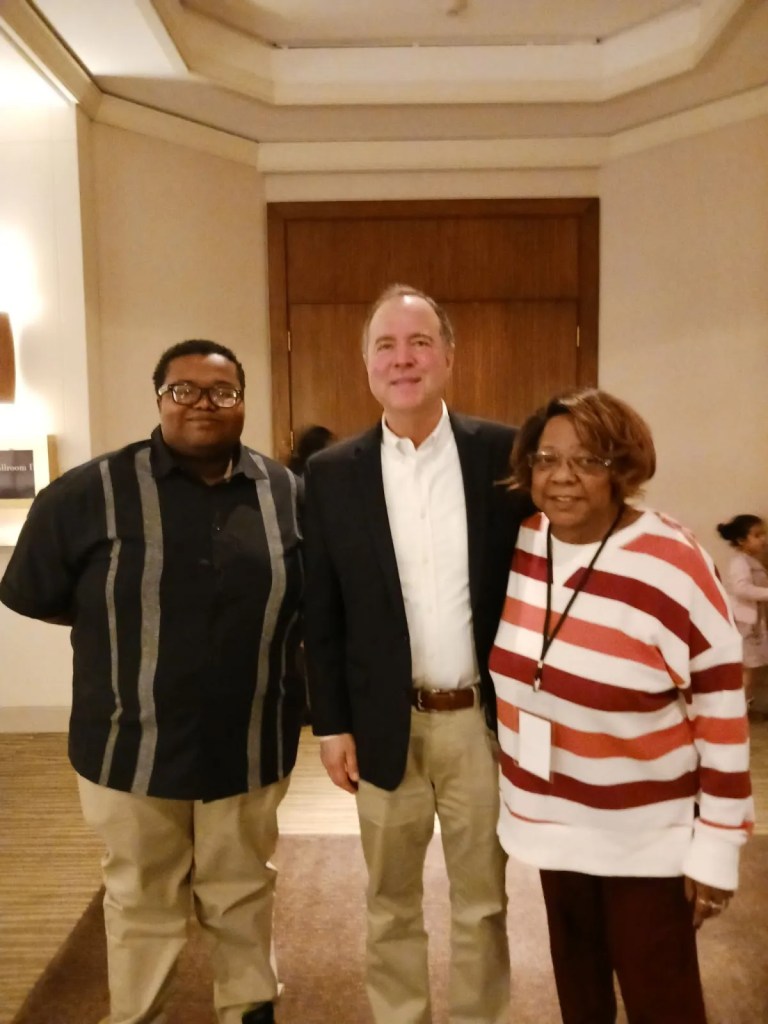
“One of the things I’ve learned is that it’s sometimes a very nasty job, sometimes a very hard job, but when you know you’re helping people in need, it’s extremely rewarding, and it can be a career,” Brown said.
Caring for her family is not easy, but Brown has found support and strength in the union. As a member of SEIU Local 2015, Brown has access to medical insurance, sick pay, wage raises and an awareness of her rights as a caregiver. Brown recognized that she has control over what she is paid to do as a family caregiver. The union has educated her on several important issues such as her ability to get power of attorney without “spending a fortune.”
Nary shared that a big win for the union was getting a fair contract for a wage increase with San Bernardino County, as well as an increase in sick leave. The rate paid to providers in San Bernardino County is $18.10 per hour. This rate was determined by negotiations by SEIU and the Public Authority in San Bernardino County.
Nary hopes San Bernardino County will continue to work with the union and keep IHSS funded for future generations and future care providers, like himself.
“[I] just thank everybody that keeps the program what it is today. [It’s] a blessing to have it to care for the disabled and elderly because one day we’re all going to need somebody to give us an extra hand with our day-to-day living,” Nary said.

 Breanna Reeves